Wildebeest Migration Kenya 2025: Nature’s Greatest Show on Earth
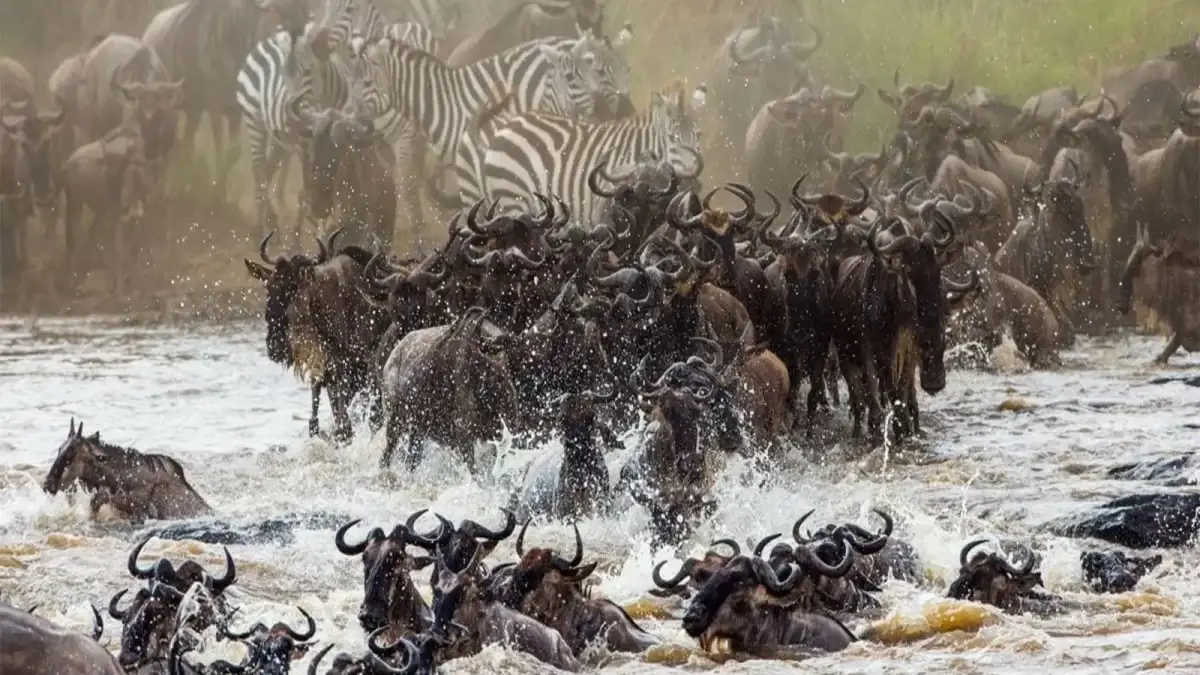
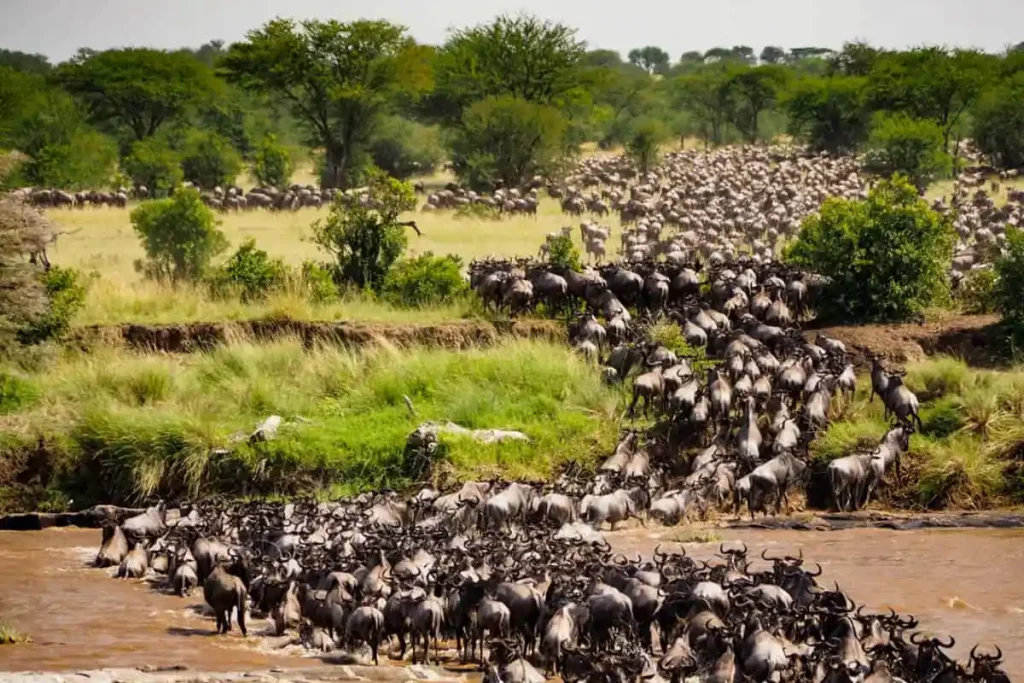
If there’s one wildlife event that should be on every nature lover’s bucket list, it’s the wildebeest migration Kenya 2025 . Each year, over 1.5 million wildebeest, accompanied by zebras and gazelles, journey from Tanzania’s Serengeti into Kenya’s Masai Mara National Reserve, creating an awe-inspiring spectacle of survival, instinct, and raw beauty. This animal migration in Kenya is not just a sight to behold but a testament to nature’s rhythm and resilience.
Masai Mara Wildebeest Migration Kenya : Key Dates & Highlights
The Masai Mara migration 2025 promises unforgettable moments:
- July: First herds arrive in the Masai Mara, marking the beginning of the migration season.
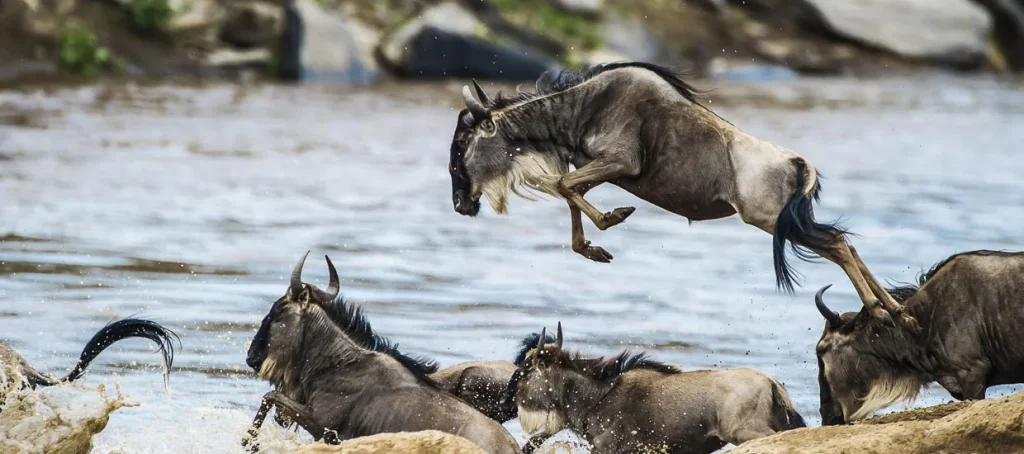
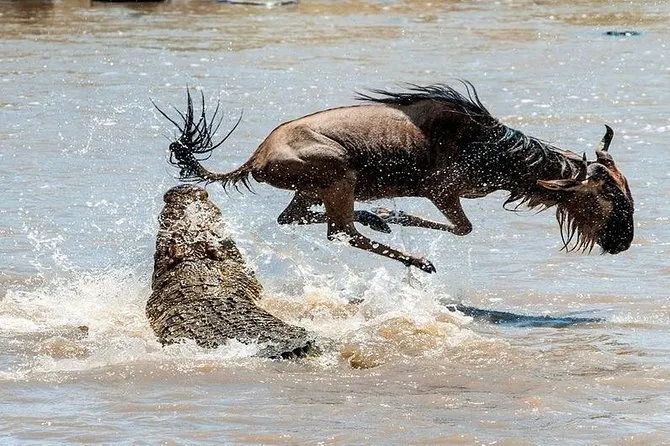
- August: Peak migration period with dramatic Mara River crossings, where wildebeest face crocodile-infested waters.
- September: Continued crossings and abundant predator-prey interactions.
- October: Herds begin their journey back to the Serengeti as the rains return.
For a detailed month-by-month breakdown, visit the Masai Mara Migration 2025 Dates.
The Journey: From Calving to Crossing
The migration begins in the southern Serengeti’s Ndutu region during January and February, known as the calving season. Here, around 500,000 calves are born, attracting predators like lions and hyenas. As the dry season sets in, the herds move northwards, facing challenges like the Grumeti and Mara River crossings, where crocodiles lie in wait.
The wild beast migration is not just about movement; it’s about survival, with each step presenting new challenges and dangers.
Wildlife Encounters Beyond Wildebeest
While the migration is the star attraction, the Masai Mara offers a plethora of wildlife experiences:
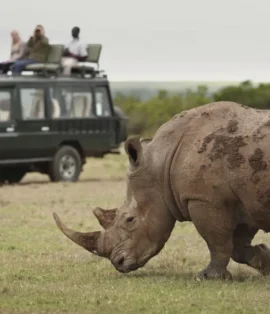
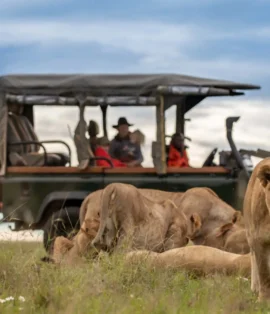
- Big Five: Lions, leopards, elephants, buffaloes, and rhinos roam the plains.
- Birdlife: Over 400 bird species, making it a birdwatcher’s paradise.
- Predator-Prey Dynamics: Witness the raw interactions between hunters and the hunted.
Planning Your Safari: Tips & Recommendations
Best Time to Visit : Mid-July to late October offers the best chances to witness the migration.
Accommodation: Consider staying in lodges like Sanctuary Olonana or Kicheche Mara Camp for prime viewing spots.
Booking: It’s advisable to book at least 6-12 months in advance due to high demand during migration season.
Activities:
- Hot Air Balloon Safaris: Experience the migration from the skies.
- Guided Game Drives: Get up close with the wildlife.
- Cultural Visits: Engage with the Maasai community and learn about their traditions.
Why the Wildebeest Migration Kenya 2025 Matters
The wildebeest migration Kenya is more than just a tourist attraction; it’s a vital ecological process:
- Ecosystem Balance: The movement of the herds helps in nutrient recycling and maintaining grassland health.
- Predator Support: Predators rely on the migration for sustenance.
- Tourism Revenue: Supports local communities and conservation efforts.
Discover more about the migration’s ecological impact on Masai Mara National Reserve.
Embark on the Adventure of a Lifetime
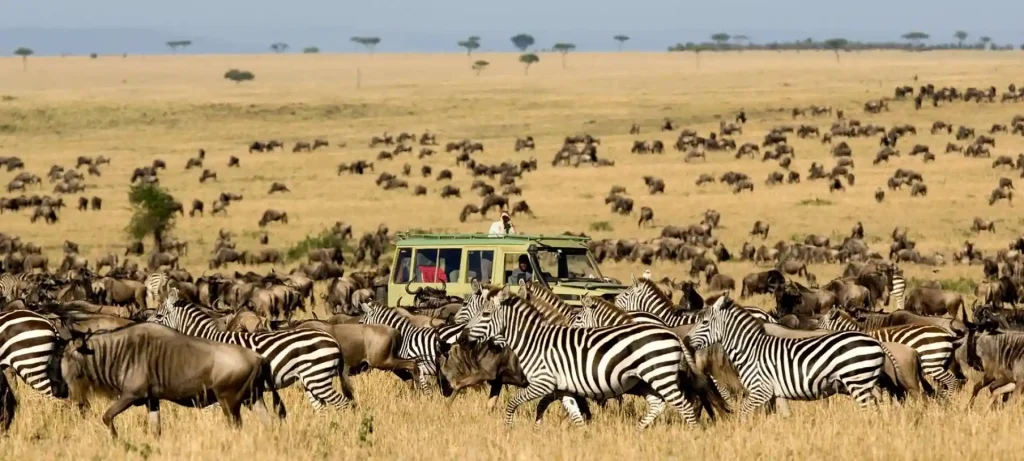
Witnessing the wildebeest migration in Kenya is an experience that stays with you forever. From the thunderous hooves to the dramatic river crossings, it’s nature’s theater at its finest. Whether you’re a seasoned traveler or a first-time safari-goer, the Masai Mara migration 2025 promises memories that will last a lifetime.
Ready to plan your adventure? Explore Our Safari’s Packages for tailored experiences.