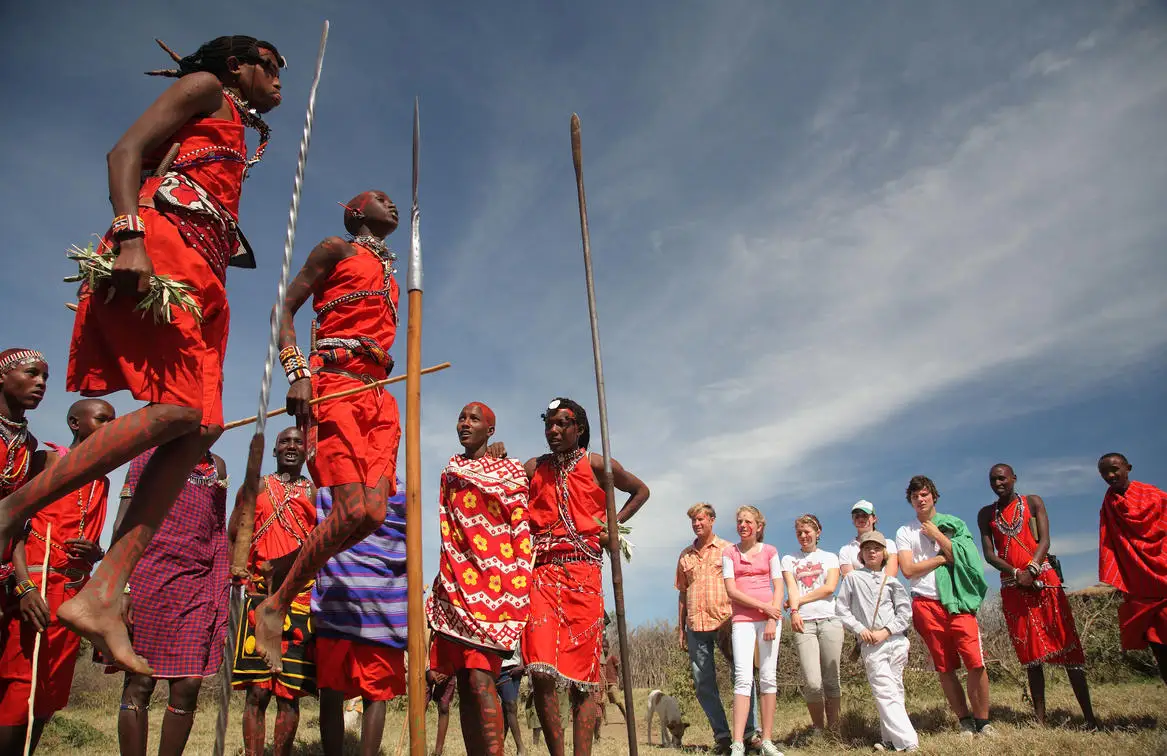
Kenya Safari with Maasai Warriors | Maasai Mara Cultural Safari
Did you know that a Kenya safari can introduce you not only to some of Africa’s most
remarkable wildlife, but also to communities whose traditions have been connected to the
landscapes of southern Kenya for generations?
A Kenya safari with Maasai warriors combines classic wildlife viewing in the Maasai Mara
with an opportunity to learn about Maasai culture, traditions and everyday community life.
During the journey, travelers can search for lions, elephants, leopards, buffaloes, giraffes and
other wildlife before spending time with Maasai hosts and learning more about their relationship
with livestock, the land and the wider Mara ecosystem.
For travelers who want to experience Kenya beyond the traditional game drive, combining
wildlife and culture can provide a deeper and more meaningful safari experience.
What Is a Kenya Safari with Maasai Warriors?
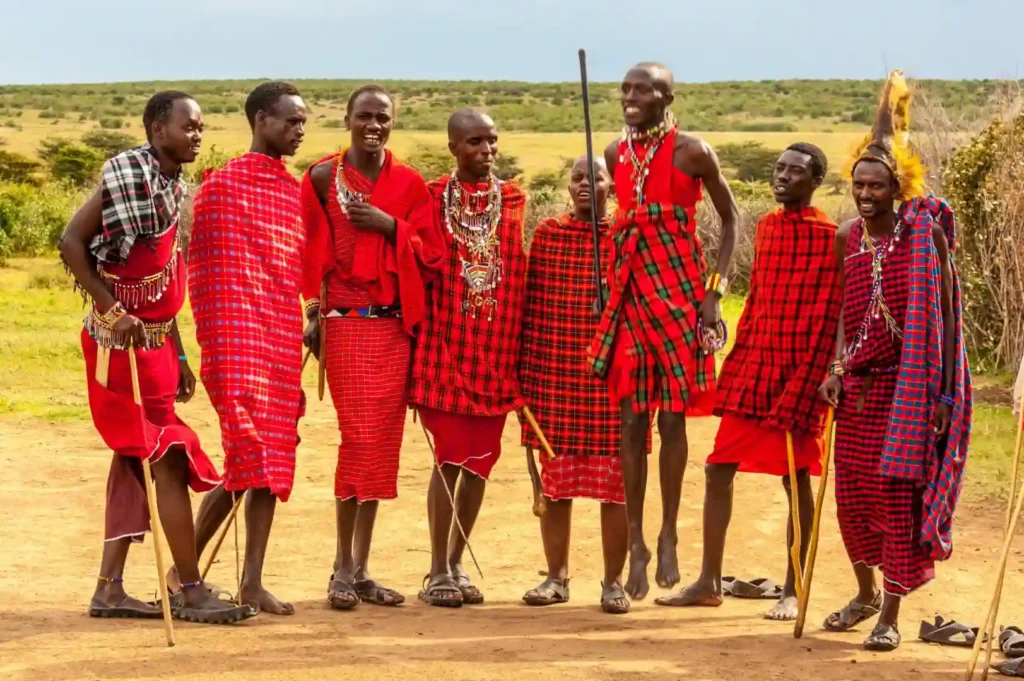
A Kenya safari with Maasai warriors is a safari experience that combines wildlife viewing with a
respectful cultural visit to a Maasai community.
The wildlife portion normally includes game drives through the Maasai Mara and surrounding
conservancies.
The cultural experience provides an opportunity to meet local community members, ask
questions and learn about traditions that continue to form an important part of Maasai identity.
Depending on the community and itinerary, the experience may include:
• Visiting a Maasai village or manyatta
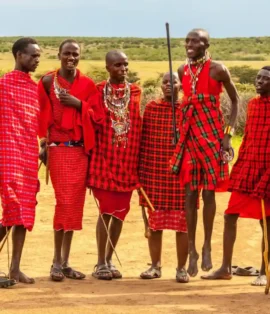
• Meeting Maasai warriors and elders
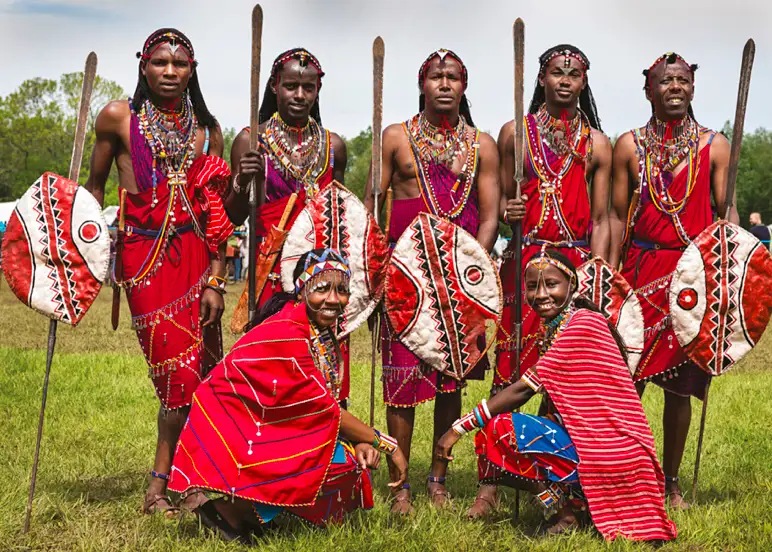
• Learning about traditional clothing
• Discovering the meaning of Maasai beadwork
• Listening to traditional songs and stories
• Watching cultural dances
• Learning about cattle and pastoral life
• Exploring traditional homestead design
• Learning about local plants and their traditional uses
• Visiting community craft projects
• Joining a guided nature or cultural walk
• Purchasing handmade beadwork directly from local artisans
Each village and community is different.
Travelers should therefore approach the experience with an open mind rather than expecting
every cultural visit to follow exactly the same program.
Who Are the Maasai?
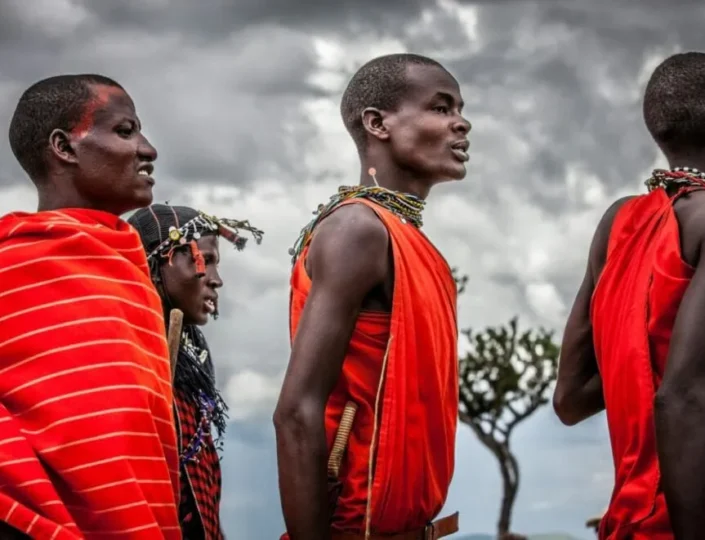
The Maasai are one of East Africa’s best-known pastoral communities and are found mainly in
Kenya and northern Tanzania.
Traditionally, livestock such as cattle, sheep and goats have played an important role in Maasai
livelihoods, culture and social life.
The Maasai are widely recognized for their colorful clothing, intricate beadwork, songs and
traditional dances.
However, Maasai culture goes far beyond the images travelers commonly see in travel
photographs.
Modern Maasai communities include teachers, conservationists, safari guides, business owners,
farmers, students and people working in many different professions.
A cultural safari offers travelers the opportunity to hear directly from local people and better
understand both traditional practices and contemporary Maasai life.
Why Combine Maasai Culture with a Maasai Mara Safari?
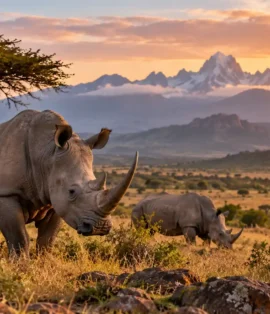
The Maasai Mara is one of Kenya’s most celebrated safari destinations, known for its open grasslands, winding river systems and scattered acacia trees that support an extraordinary variety of wildlife.
Many travelers come to the region primarily for game viewing, but the wider Mara landscape is also home to Maasai communities that have lived alongside wildlife for generations. A Kenya safari with Maasai warriors gives travelers the opportunity to combine wildlife viewing with a deeper cultural understanding of the destination.
In the morning, you may watch lions resting in the grass, giraffes feeding among the trees or elephants moving across the plains. Later, you may spend time with Maasai hosts learning about livestock, family life, traditions and the challenges and opportunities that come with living close to wildlife areas.
This combination creates a safari experience that goes beyond photography. It becomes an opportunity to understand the people, wildlife and landscapes that together make the Maasai Mara such a distinctive destination.
What Happens During a Maasai Village Visit?
A Maasai village visit should be treated as a cultural exchange rather than simply another tourist
attraction.
When travelers arrive, community members may introduce them to different aspects of village
life.
Depending on the arrangements, visitors may learn about traditional homes, livestock, clothing,
ceremonies, beadwork and community traditions.
Songs and dances may also form part of the experience.
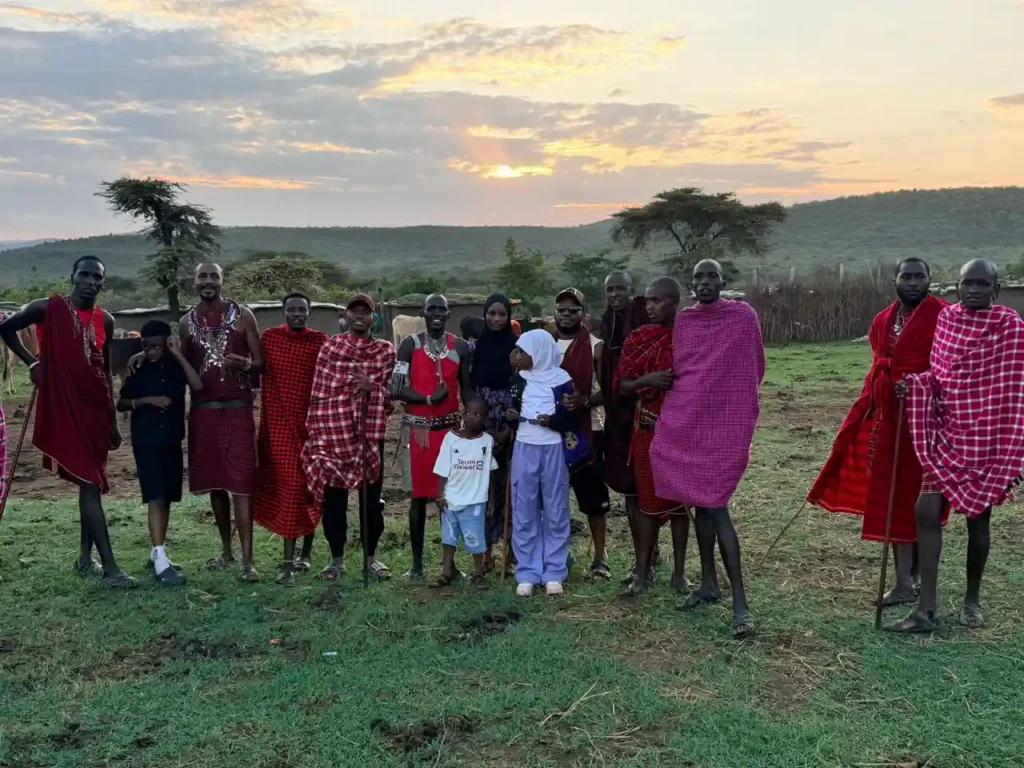
Travelers may have an opportunity to speak with warriors, elders, women, guides and other
members of the community.
Ask questions.
Listen carefully.
Allow conversations to develop naturally.
Some of the most interesting discussions may involve how education, tourism, technology and
conservation are influencing life within modern Maasai communities.
The experience should not simply be about observing people.
It should be about meeting them.
Meeting Maasai Warriors
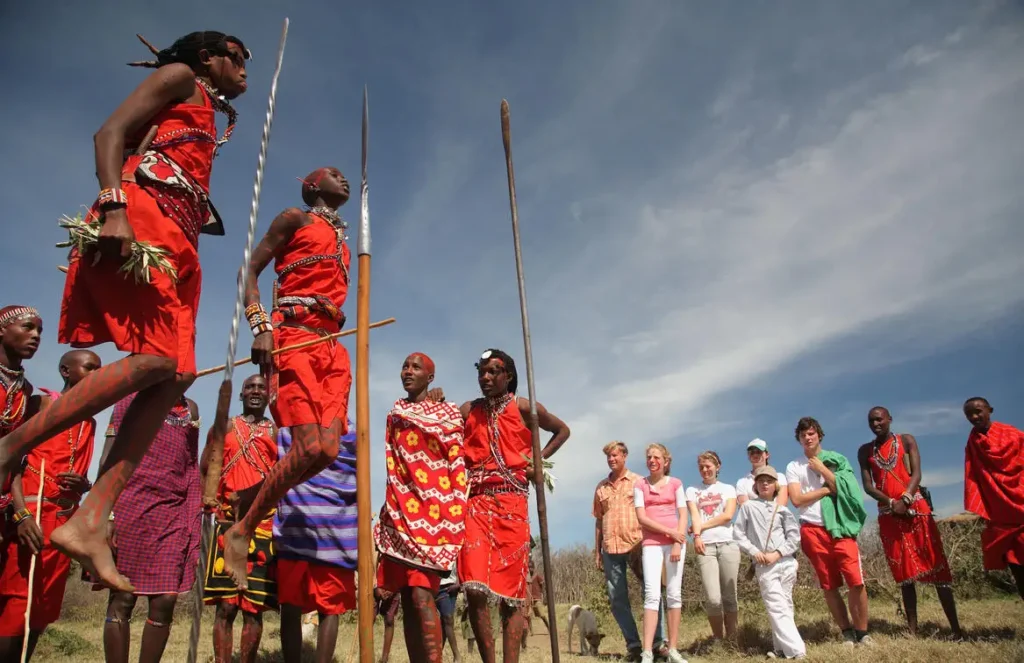
Meeting Maasai warriors is often one of the experiences travelers remember most from a cultural
safari.
Visitors may learn about the traditional responsibilities associated with warriors, community
protection, livestock and different stages of Maasai life.
Cultural demonstrations may also include traditional songs, jumping dances and stories.
However, travelers should remember that the popular image of the Maasai warrior represents
only one part of Maasai society.
A meaningful visit should provide opportunities to learn about the wider community, including
women, elders, artisans, children and people involved in modern careers and conservation.
This creates a more complete understanding of Maasai culture.
Maasai Beadwork and Traditional Clothing
The relationship between communities and wildlife is an important part of understanding the
Maasai Mara.
Wild animals do not always remain inside protected areas.
Elephants, lions, leopards, hyenas and other species may move through landscapes used by local
communities and livestock.
Living alongside wildlife can therefore create both opportunities and challenges.
Tourism and conservation programs can provide employment and income, while communities
may also experience livestock losses, damage to property and competition for water and grazing
areas.
During a cultural safari, travelers may have an opportunity to learn about these issues from the
people who experience them directly.
Understanding this relationship can provide a deeper perspective on wildlife conservation.
Seeing a lion during a game drive is exciting.
Learning how neighboring communities live alongside that lion adds another dimension to the
experience.
Is Visiting a Maasai Village Ethical?
A Maasai village visit can be a positive cultural experience when it is organized respectfully and
the host community is actively involved.
Travelers should choose experiences that allow local people to participate in how tourism
activities are organized and benefit from visitors.
Responsible cultural tourism begins with respect.
During your visit:
• Ask before photographing people
• Respect anyone who does not want to be photographed
• Follow the instructions of your guide and community hosts
• Avoid entering homes without permission
• Listen respectfully during conversations and demonstrations
• Avoid making assumptions about Maasai culture
• Do not pressure people to pose for photographs
• Consider buying crafts directly from local artisans
• Avoid giving sweets or money directly to children
• Respect private ceremonies and community spaces
• Allow hosts to determine which activities are appropriate
Travelers should remember that they are visiting people’s homes and communities.
The experience should therefore feel like an exchange between people rather than a performance
organized only for photography.
Photography During a Maasai Cultural Experience
A cultural visit can offer excellent photography opportunities, but photographing people requires
more consideration than photographing wildlife.
Always ask permission before taking close portraits.
Some community members may be comfortable being photographed, while others may prefer
not to be.
Useful photography tips include:
• Ask before taking portraits
• Follow your guide’s advice
• Avoid photographing children without appropriate permission
• Keep a respectful distance
• Avoid intrusive close-up photography
• Do not interrupt conversations for photographs
• Avoid asking people to repeatedly perform activities
• Take wider photographs showing the surrounding landscape
• Be careful when using flash
• Spend part of the experience without your camera
Sometimes putting the camera away allows travelers to have better conversations and create
stronger memories.
Wildlife You May See in the Maasai Mara
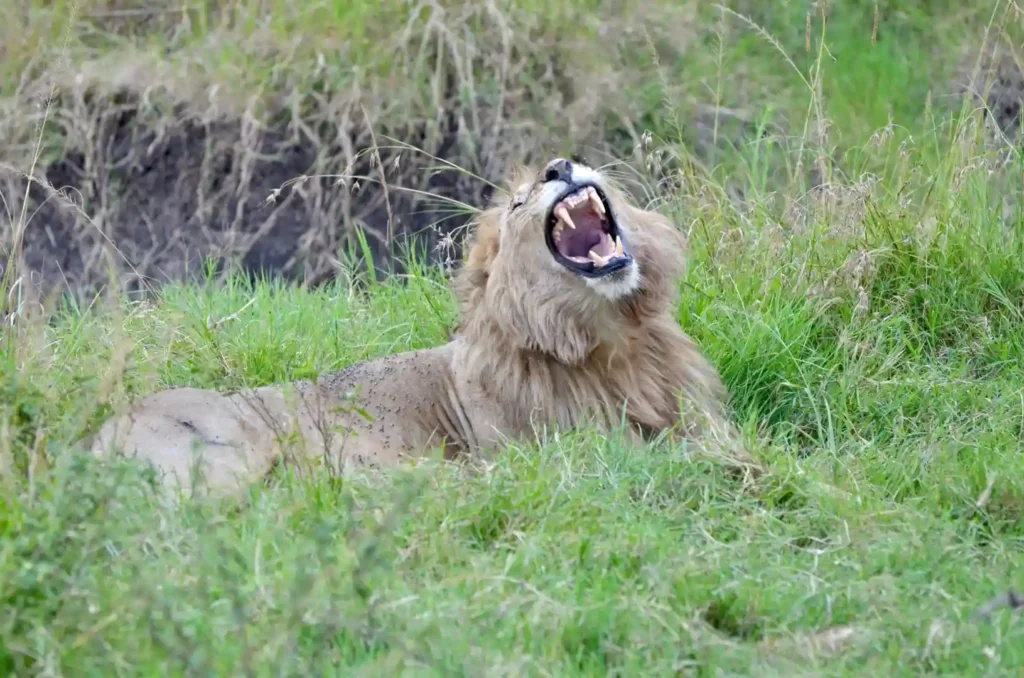
A cultural experience can easily be combined with traditional game drives.
The Maasai Mara supports an extraordinary variety of wildlife.
Depending on the season, location and natural movements, travelers may encounter:
• Lions
• African elephants
• Leopards
• African buffaloes
• Rhinos
• Cheetahs
• Giraffes
• Zebras
• Wildebeest
• Hippos
• Spotted hyenas
• Warthogs
• Gazelles
• Elands
• Topis
• Impalas
• Crocodiles
• Jackals
• Numerous bird species
Specific wildlife sightings cannot be guaranteed.
Wild animals move freely, and every game drive is different.
This unpredictability is part of what makes an African safari exciting.
The Great Wildebeest Migration
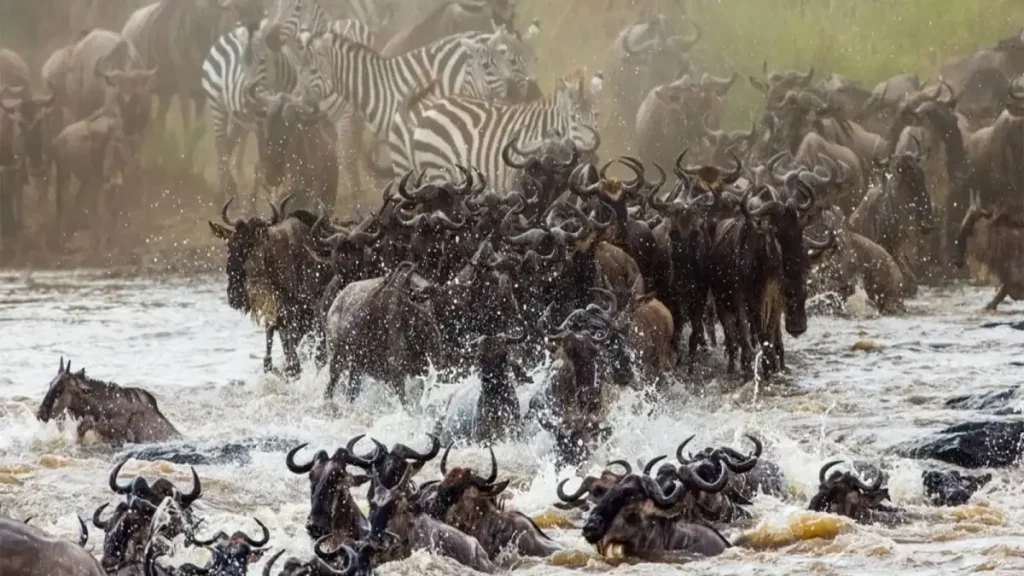
Travelers visiting the Maasai Mara during the migration season may also have the opportunity to witness part of the famous Great Wildebeest Migration. Huge herds of wildebeest, accompanied by zebras and other grazing animals, move through the wider Serengeti–Mara ecosystem in search of fresh grazing and water.
Their exact movements depend on rainfall, water availability and other natural conditions, so river crossings and large herd movements can never be guaranteed.
A Kenya safari with Maasai warriors can be planned during the migration season for travelers who want to combine exceptional wildlife viewing with meaningful Maasai cultural experiences. To get the most from the journey, travel dates should be planned carefully around expected wildlife movements while allowing time for both game drives and cultural activities.
Where to Stay During a Maasai Mara Cultural Safari
The Maasai Mara offers a wide range of accommodation options for different travel styles and budgets. Travelers can choose from comfortable tented camps, traditional safari lodges, intimate bush camps and high-end luxury properties.
Choosing the right place to stay can have a significant influence on your overall Kenya safari with Maasai warriors, especially when balancing wildlife viewing, comfort, privacy and access to cultural experiences.
Accommodation is available within the Maasai Mara National Reserve, in the Mara Triangle, around nearby private conservancies and close to communities surrounding the wider Mara ecosystem. Each area offers a different safari experience, so your choice should depend on your preferred activities, budget and travel style.
Staying Inside the Maasai Mara National Reserve
Staying inside or close to the reserve can provide convenient access to wildlife-viewing areas.
This can be particularly useful for travelers who want to maximize time on game drives.
Accommodation may range from larger safari lodges to smaller tented camps.
A stay within the reserve is suitable for travelers interested primarily in classic Maasai Mara
wildlife viewing.
Staying in a Private Conservancy
Private conservancies surrounding the Maasai Mara can offer a different safari experience.
Depending on the property and conservancy rules, activities may include game drives, guided
walks, cultural visits and other experiences.
Some conservancy properties are closely connected with surrounding Maasai communities.
This can make them especially suitable for travelers who want both wildlife and cultural
experiences.
Staying Near Maasai Communities
Travelers particularly interested in culture may choose accommodation that works closely with
nearby Maasai communities.
These properties may help arrange village visits, guided cultural walks or conversations with
local guides and hosts.
The experience should still be respectful and organized with community participation.
What to Look for When Choosing Accommodation
Before selecting a camp or lodge, consider:
• Location
• Budget
• Level of comfort
• Distance from wildlife-viewing areas
• Private or shared game drives
• Cultural activities available
• Family suitability
• Honeymoon facilities
• Photography opportunities
• Meal arrangements
• Road or air access
• Safari extensions
A typical Maasai Mara stay may include:
• En-suite safari tents or rooms
• Breakfast, lunch and dinner
• Morning and afternoon game drives
• Picnic lunches where required
• Sundowner experiences
• Cultural visits
• Guided walks where permitted
• Wildlife photography opportunities
• Transfers between airstrips and accommodation
Facilities and activities vary between camps and lodges.
Hideaway Safaris can recommend accommodation according to your travel dates, preferred
location, budget and level of luxury.
Whether you prefer an intimate tented camp surrounded by nature, a comfortable family safari
lodge or a luxury property overlooking the Mara landscape, your accommodation can be
incorporated into a personalized itinerary.
Best Time for a Kenya Safari with Maasai Warriors
A Maasai Mara cultural safari can be enjoyed at different times of the year.
The best period depends on what travelers want to experience.
Wildlife is present throughout the year, although changing rainfall patterns influence the
landscape, animal movements and road conditions.
The drier periods are often popular for wildlife viewing because vegetation may be shorter and
animals may gather around available water sources.
Greener periods can offer beautiful landscapes, fewer visitors in some areas and excellent
photography conditions.
Travelers interested in the Great Migration may choose dates when large herds are expected to
move through the Maasai Mara.
However, natural events cannot be predicted with complete accuracy.
Cultural activities may be available throughout much of the year, depending on the host
community and arrangements.
Travelers should discuss their preferred wildlife experiences, cultural interests and travel dates
before confirming an itinerary.
What Should You Wear During a Maasai Cultural Visit?
Comfortable safari clothing is usually suitable for a community visit.
Travelers should also dress respectfully.
Useful items include:
• Lightweight trousers or comfortable longer shorts
• Breathable shirts
• Comfortable walking shoes
• Sun hat
• Sunglasses
• Sunscreen
• Reusable water bottle
• Light jacket for cool mornings
• Camera or phone
• Small day bag
Avoid clothing that may be unnecessarily revealing during a community visit.
Your guide can provide specific advice before the experience.
What Can You Combine with a Kenya Safari with Maasai Warriors?
A Kenya safari with Maasai warriors does not have to end in the Maasai Mara.
The journey can be combined with other destinations depending on the traveler’s available time
and interests.
Possible extensions include:
Lake Naivasha
Enjoy a boat ride, birdwatching and the opportunity to see hippos and waterbirds.
Lake Nakuru National Park
Add another wildlife destination known for its lake scenery, birdlife and rhino viewing.
Amboseli National Park
Continue south for elephant viewing and dramatic landscapes associated with Mount
Kilimanjaro.
Laikipia
Explore conservancies and wildlife areas in central Kenya.
Samburu
Travel north for a different landscape and wildlife species associated with Kenya’s northern
regions.
Diani Beach
Finish the safari with several days relaxing on Kenya’s Indian Ocean coast.
Watamu
Combine wildlife with beaches, marine activities and coastal experiences.
Tanzania
Extend the journey into northern Tanzania for destinations such as the Serengeti and Ngorongoro
area.
A safari-and-beach combination can be particularly attractive for travelers who want both
adventure and relaxation within one journey.
4-Day Kenya Safari with Maasai Warriors Itinerary
Day 1: Nairobi to Maasai Mara
Travel from Nairobi to the Maasai Mara by road or scheduled safari flight.
After arriving at your camp or lodge, meet your guide and settle into your accommodation.
Later, join an afternoon game drive and begin exploring the Mara landscape.
Look for elephants, giraffes, zebras, antelopes, lions and other wildlife before returning to your
accommodation for dinner.
Day 2: Full-Day Maasai Mara Safari
Begin the day with an early-morning game drive.
Explore different wildlife areas while searching for lions, elephants, buffaloes, cheetahs,
leopards and other species.
Depending on your itinerary, you may carry a picnic lunch or return to your lodge during the
middle of the day.
Continue wildlife viewing during the afternoon before returning to your accommodation.
Day 3: Maasai Cultural Experience and Game Drive
After breakfast, visit a Maasai community accompanied by your guide.
Meet local hosts and learn about community life, livestock, traditional clothing, beadwork and
different aspects of Maasai culture.
Depending on the arranged experience, the visit may include conversations, songs, dances,
storytelling or a guided cultural walk.
Take photographs only with permission and allow enough time to speak with your hosts.
Later, return to the safari landscape for an afternoon game drive.
Day 4: Final Game Drive and Return to Nairobi
Wake early for a final wildlife-viewing experience.
Enjoy the morning landscape and search for animals before returning to your accommodation for
breakfast.
Afterward, travel back to Nairobi or take a scheduled safari flight.
The journey can also be extended to another safari destination or Kenya’s coast.
Tips for a Better Cultural Safari Experience
Approach the experience with curiosity rather than expectations.
Ask respectful questions and allow local hosts to explain their culture in their own words.
Avoid trying to rush the visit.
A meaningful conversation may be more memorable than completing a long list of activities.
Respect photography rules.
Support local businesses and artisans where appropriate.
Listen to your safari guide.
Most importantly, remember that cultural tourism involves real people and communities.
Respect should always come before entertainment
Why Choose Hideaway Safaris for a Kenya Safari with Maasai Warriors?
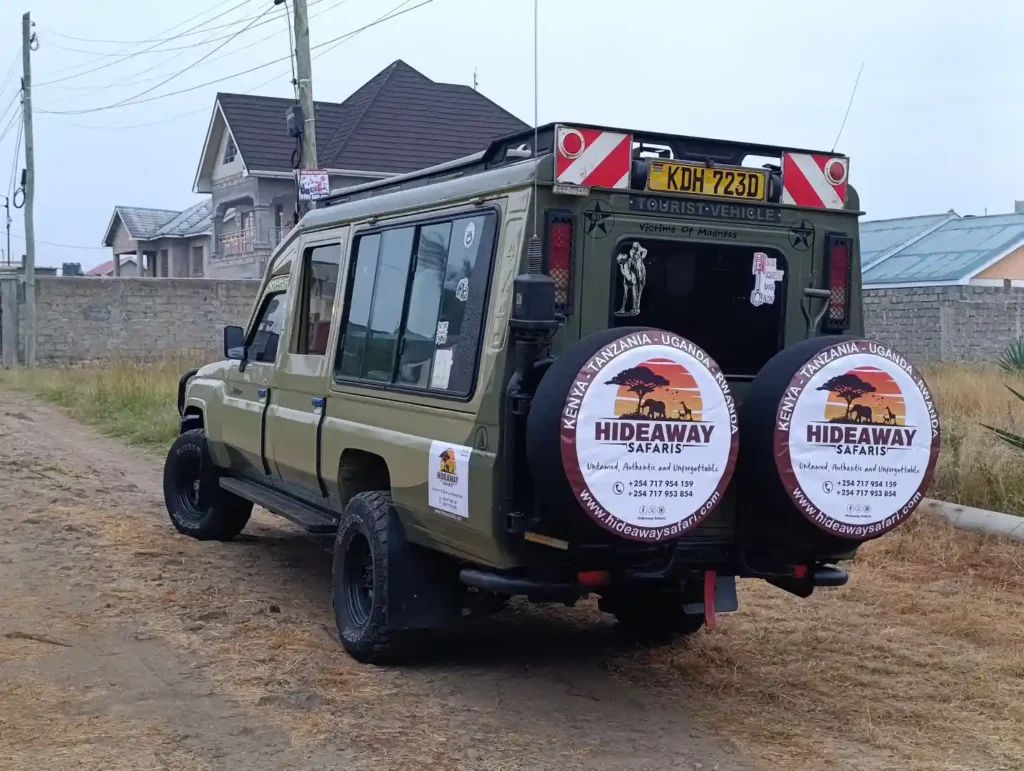
Planning a Kenya safari with Maasai warriors requires careful coordination between wildlife areas, accommodation, transportation and cultural activities. A well-planned itinerary allows travelers to enjoy the Maasai Mara’s wildlife while also experiencing meaningful cultural encounters with local Maasai communities.
Hideaway Safaris can create a personalized Maasai Mara itinerary based on your travel dates, budget, preferred accommodation and interests. Your safari can be tailored around wildlife, culture, photography, relaxation or a combination of different experiences.
Travelling with Hideaway Safaris can include:
- Personalized Maasai Mara safari itineraries
- Experienced safari driver-guides
- Responsible Maasai cultural experiences
- Private safari transportation
- Carefully selected safari lodges and camps
- Morning and afternoon game drives
- Wildlife photography safaris
- Family safari itineraries
- Honeymoon safaris
- Road and fly-in safari options
- Nairobi airport and hotel transfers
- Safari-and-beach combinations
- Maasai Mara and Diani Beach itineraries
- Maasai Mara and Watamu combinations
- Kenya and Tanzania safari extensions
- Local assistance throughout your journey
A Kenya safari with Maasai warriors can be customized to match your preferred travel style, whether you are looking for a private wildlife safari, cultural experience, romantic getaway, family adventure or an extended East African journey.
How Much Does a Kenya Safari with Maasai Warriors Cost?
The cost of a Kenya safari with Maasai warriors depends on several factors, including the length of the safari, travel season, accommodation category, number of travelers, transportation and the activities included in the itinerary.
Travelers can choose from comfortable tented camps, mid-range safari lodges and luxury properties in and around the Maasai Mara. Private transportation, park or conservancy fees, cultural visits, game drives and optional activities can also influence the overall cost.
A shorter safari may focus mainly on the Maasai Mara, while a longer itinerary can include destinations such as Amboseli, Lake Nakuru, Diani Beach, Watamu or even Tanzania.
Hideaway Safaris can customize a Kenya safari with Maasai warriors according to your travel dates, preferred accommodation, budget and interests. This allows you to combine wildlife viewing with a respectful Maasai cultural experience while choosing the safari style that works best for you.
For an accurate price based on your travel plans, request a personalized safari quotation from Hideaway Safaris.
Plan Your Kenya Safari with Maasai Warriors
A Kenya safari with Maasai warriors offers an opportunity to experience the Maasai Mara
from more than one perspective.
You may spend the morning watching lions resting across the grasslands, elephants moving
through the plains or giraffes feeding among acacia trees.
Later, you may sit with Maasai hosts, listen to their stories and learn about traditions, livestock,
community life and the relationship between people and the surrounding landscape.
Together, these experiences provide a deeper understanding of the Maasai Mara.
The journey becomes more than a wildlife safari.
It becomes an opportunity to experience Kenya through its landscapes, wildlife, people and
culture.
Contact Hideaway Safaris to plan a personalized Maasai Mara cultural safari combining
unforgettable wildlife encounters, carefully selected accommodation and meaningful
cultural experiences.
FAQs About a Kenya Safari with Maasai Warriors
Can you go on a Kenya safari with Maasai warriors?
Yes. A Kenya safari with Maasai warriors can combine wildlife game drives in the Maasai Mara with organized cultural experiences involving local Maasai communities. The exact activities depend on the itinerary and the community being visited.
Where can travelers meet Maasai warriors in Kenya?
The Maasai Mara and surrounding conservancies are among the best-known areas for combining wildlife safaris with Maasai cultural experiences. Maasai communities also live in other parts of southern Kenya.
What happens during a Maasai cultural experience?
Activities vary, but travelers may learn about Maasai traditions, livestock, family life, traditional clothing, beadwork and the relationship between local communities and wildlife. Cultural visits should be organized respectfully and with the involvement of the host community.
How many days do you need for a Kenya safari with Maasai warriors?
A 3- to 4-day Maasai Mara itinerary can provide enough time for several game drives and a cultural experience. Travelers with more time can extend their safari to additional destinations in Kenya or combine the trip with a beach holiday.
What is the best time for a Kenya safari with Maasai warriors?
The Maasai Mara can be visited throughout the year. The dry seasons generally provide good wildlife-viewing conditions, while travelers visiting during the migration period may also have the opportunity to see large wildebeest and zebra herds. Wildlife movements and river crossings, however, depend on natural conditions and cannot be guaranteed.
How much does a Kenya safari with Maasai warriors cost?
The price depends on the number of safari days, accommodation level, travel season, group size, transport and activities included. Hideaway Safaris can prepare a customized quotation based on your preferred dates, budget and travel style.
Can I combine a Maasai cultural safari with other destinations?
Yes. A Kenya safari with Maasai warriors can be combined with destinations such as Amboseli, Lake Nakuru, Diani Beach, Watamu or other Kenyan safari areas. Longer itineraries can also include Tanzania, depending on your travel plans.
Is a Maasai cultural visit suitable for families?
It can be. Families can combine wildlife viewing with educational cultural experiences that introduce children to local traditions, conservation and community life. The itinerary can be adjusted depending on the age of the children and the family’s interests.