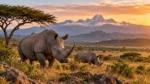
Lewa Wildlife Conservancy Safari 2026
Did you know that one of Kenya’s most important rhino conservation areas can also provide an
intimate luxury safari experience?
Lewa Wildlife Conservancy lies near the foothills of Mount Kenya in northern Kenya and
protects approximately 62,000 acres of privately managed wilderness.
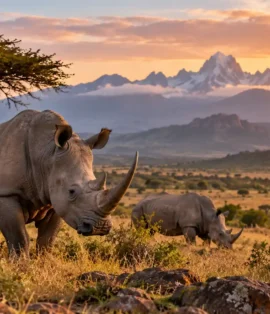
The conservancy is particularly known for black and white rhinos, endangered Grevy’s zebras,
elephants and a strong conservation programme that connects wildlife protection with
surrounding communities.
Together with neighboring Borana Conservancy, Lewa currently protects more than 14% of
Kenya’s black rhino population. Lewa also describes itself as supporting the world’s largest
single population of Grevy’s zebra and more than 500 bird species.
For travelers interested in wildlife, conservation, photography and smaller luxury lodges, Lewa
can provide a very different experience from Kenya’s larger national parks.
Why Visit Lewa Wildlife Conservancy?

Lewa combines wildlife viewing with the privacy of a conservancy.
Instead of focusing only on game drives, visitors can learn about the conservation work required
to protect endangered species and maintain a healthy ecosystem.
Depending on natural movements, wildlife that may be encountered includes:
• Black and white rhinos
• Elephants
• Lions
• Cheetahs
• Grevy’s zebras
• Giraffes
• Buffaloes
• Antelopes
• Numerous bird species
Specific wildlife sightings cannot be guaranteed.
Animals move freely within the landscape according to water, food, weather and natural
behavior.
Rhinos at Lewa Wildlife Conservancy

Rhino conservation is one of the main reasons Lewa has become internationally recognized.
For more than 30 years, the conservancy has played an important role in the recovery of Kenya’s
black rhino population.
Lewa reports that Kenya’s black rhino population has recovered from fewer than 300 individuals
in the 1980s to more than 1,000 today, with Lewa and neighboring Borana protecting a
significant proportion of the national population.
For travelers, this means Lewa can provide opportunities to observe rhinos within a large natural
landscape while also learning about the security, monitoring and habitat protection required to
conserve them.
A rhino sighting should still be treated as a wildlife encounter rather than a guaranteed attraction.
Grevy’s Zebras at Lewa

Lewa is also particularly important for the conservation of Grevy’s zebra.
Grevy’s zebras are different from the more familiar plains zebras found in destinations such as
the Maasai Mara.
They have narrower stripes, larger rounded ears and are found mainly in northern Kenya and
neighboring regions.
Lewa reports that only a little over 3,000 Grevy’s zebras remain in the wild globally, making
conservation of suitable northern Kenya habitat especially important.
Travelers visiting Lewa may therefore encounter both impressive wildlife and species that are
significantly more difficult to see on Kenya’s traditional southern safari circuit.
What Is a Safari at Lewa Like?
Game drives remain one of the main ways to explore Lewa.
Experienced guides travel through open grasslands, woodland and other habitats while searching
for wildlife.
Because Lewa is a private conservancy, the overall safari atmosphere can feel more intimate than
some busier reserves.
A Lewa itinerary may include:
• Morning and afternoon game drives
• Rhino viewing
• Wildlife photography
• Birdwatching
• Guided walks where offered
• Conservation-focused experiences
• Cultural or community visits where appropriately arranged
• Horse riding at selected properties
• Bush meals and sundowners
• Fly-in safari arrangements
Activities vary by lodge and should be confirmed when planning the journey.
Conservation Experiences at Lewa
One of the most interesting reasons to include Lewa in a Kenya safari is the opportunity to learn
what happens behind the scenes.
Lewa offers conservation-focused experiences for guests staying at lodges within Lewa and
Borana.
Depending on availability, these may include:
• Meeting tracker dogs
• Learning about wildlife security operations
• Visiting conservation education projects
• Learning about the elephant underpass and wildlife corridors
• Visiting community-supported schools and programmes
These activities are limited and should be arranged through the traveler’s accommodation in
advance where possible.
This can make a Lewa safari particularly rewarding for travelers who want to understand how
tourism, wildlife conservation and local communities are connected.
Luxury Lodges at Lewa Wildlife Conservancy
Lewa offers several high-quality safari properties with different levels of privacy and style.
The conservancy currently lists accommodation including Elewana Kifaru House, Elewana
Lewa Safari Camp, Sirikoi Lodge, Lewa House and Lewa Wilderness.
Sirikoi Lodge
Sirikoi is a small family-owned luxury lodge located beside a spring-fed stream.
Accommodation includes luxury tents, a cottage and a private house.
Its intimate design can work particularly well for couples, honeymooners and families looking
for additional privacy.
Lewa Safari Camp
Elewana Lewa Safari Camp sits within the conservancy and provides direct access to its
protected wilderness.
It can suit travelers looking for a traditional luxury-tented safari experience while remaining
close to wildlife and conservation activities.
Kifaru House
Kifaru House is a smaller luxury property with five thatched cottages.
Its intimate scale makes it attractive to travelers looking for a quieter safari environment.
Lewa Wilderness
Lewa Wilderness offers a broader range of safari activities.
Lewa describes the experience as allowing guests to walk, ride, fly, drive and camp, making it
particularly attractive for travelers who want more than traditional vehicle-based game drives.
The best lodge should be selected according to the traveler’s budget, interests, required activities
and preferred level of privacy.
Is Lewa Good for Wildlife Photography?
Yes.
Lewa can be particularly rewarding for photographers because it combines endangered species
with varied northern Kenya landscapes.
Potential photographic subjects include:
• Rhinos
• Grevy’s zebras
• Elephants
• Big cats
• Giraffes
• Birds
• Mount Kenya landscapes
• Conservation activities
Travelers whose main interest is photography may consider arranging a private safari vehicle.
This allows more time to wait for suitable light and animal behavior without following a fixed
group schedule.
Wildlife should always be given enough space and should never be disturbed simply to obtain a
photograph.
How Do You Get to Lewa?

Lewa can be reached by air or road.
Scheduled direct flights currently operate from Nairobi’s Wilson Airport to Lewa Downs, with
services offered by AirKenya and Safarilink.
Private charter aircraft can also use the Lewa airstrip.
Travelers who prefer a road safari can drive from Nairobi.
Lewa estimates the journey at approximately four hours, although actual travel time depends on
traffic, road conditions and stops.
Fly-in travel can be particularly convenient for:
• Honeymooners
• Luxury travelers
• Travelers with limited time
• Families
• Photographers
• Guests combining several distant safari destinations
Can You Combine Lewa With Other Safari Destinations?
Yes.
Lewa’s location makes it particularly suitable for combining with other northern Kenya
destinations.
Possible itineraries include:
Lewa + Samburu
Combine rhino and Grevy’s zebra conservation with the dry landscapes and wildlife of Samburu.
Lewa + Loisaba
Explore two of Laikipia’s most distinctive private conservancies within one northern Kenya
journey.
Lewa + Maasai Mara
Combine the conservation-focused experience of Lewa with the open grasslands and big-cat
safari experiences of the Maasai Mara.
Lewa + Mount Kenya
Travelers can combine wildlife viewing with mountain scenery and additional activities around
Mount Kenya.
A longer journey can also continue toward Kenya’s Indian Ocean coast.
Best Time to Visit Lewa Wildlife Conservancy
Lewa can be visited throughout much of the year.
Drier periods can provide easier road conditions and may make some wildlife easier to locate
around water sources.
Greener periods can offer fresh landscapes, birdlife and beautiful photographic conditions.
Travelers planning to combine Lewa with the Maasai Mara may also choose their dates
according to the Great Migration season.
However, wildlife and weather should never be treated as completely predictable.
The best travel period depends on the wider itinerary and the experiences the traveler wants.
Suggested 4-Day Lewa Safari
Day 1: Nairobi to Lewa
Travel from Nairobi to Lewa by scheduled safari flight or road.
Meet your guide and transfer to your lodge.
After settling in, enjoy an afternoon game drive and begin exploring the conservancy.
Day 2: Lewa Wildlife Safari
Start the day with an early-morning game drive.
Search for rhinos, elephants, Grevy’s zebras, big cats and other wildlife.
Return to your lodge during the middle of the day before another afternoon safari experience.
Day 3: Conservation and Wildlife
Spend the morning exploring another section of Lewa.
Depending on availability and accommodation arrangements, the day may include a behind-the
scenes conservation experience, guided activity or photography-focused game drive.
Finish with another evening wildlife experience or sundowner.
Day 4: Final Safari and Departure
Enjoy a final morning activity before transferring to Lewa airstrip or beginning the road journey.
Return to Nairobi or continue to Samburu, Loisaba, the Maasai Mara or another Kenya safari
destination.
The itinerary can be shortened or extended according to travel time and interests.
Who Is a Lewa Safari Best For?
Lewa can be particularly suitable for:
• Luxury travelers
• Couples and honeymooners
• Families
• Wildlife photographers
• Rhino enthusiasts
• Conservation-focused travelers
• Birdwatchers
• Repeat safari visitors
• Travelers interested in private conservancies
• Guests combining northern and southern Kenya
The experience can be personalized according to wildlife interests, accommodation preference
and budget.
Why Choose Hideaway Safaris?

Planning a Lewa safari involves coordinating accommodation, road or air transport, safari guides
and any additional destinations.
Hideaway Safaris can create a personalized Lewa Wildlife Conservancy safari based on your
travel dates, preferred accommodation, budget and wildlife interests.
Travelling with Hideaway Safaris can include:
• Personalized Lewa safari itineraries
• Fly-in safari arrangements
• Private road transportation
• Carefully selected luxury lodges
• Experienced safari guides
• Wildlife photography experiences
• Conservation-focused activities
• Honeymoon and family itineraries
• Samburu combinations
• Loisaba extensions
• Maasai Mara combinations
• Mount Kenya extensions
• Safari-and-beach holidays
• Local assistance throughout your journey
Every itinerary can be adjusted according to the experience you want.
Plan Your Lewa Wildlife Conservancy Safari
A safari at Lewa offers more than the opportunity to see wildlife.
It provides a closer look at how endangered species, protected landscapes, tourism and
surrounding communities can exist together.
You may spend the morning searching for rhinos across open grasslands, photograph Grevy’s
zebras in the afternoon and later learn about the people working behind the scenes to protect the
conservancy.
Combined with intimate lodges and the landscapes of northern Kenya, this makes Lewa one of
the country’s most distinctive private safari destinations.
Contact Hideaway Safaris to plan a personalized Lewa Wildlife Conservancy safari
combining rhinos, luxury accommodation, conservation experiences and the remarkable
landscapes of northern Kenya.